

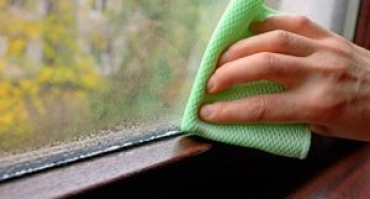
Why is there condensation on my windows?
Is there something wrong with my Heat Recovery Ventilator (HRV)? Why is there condensation on my windows?
No, your HRV doesn't have a problem.
An HRV is an effective, energy-efficient and healthy way to manage humidity in your home in winter, but your HRV doesn't remove condensation from your windows, it removes moisture from the air.
If condensation forms in your windows, it's because the temperature of the window surface is below the dew point of the surrounding air. There may be several reasons why the window temperature is below the dew point of the air, such as poor window quality or too high a dew point.
Condensation in your windows is exactly the same as the condensation that forms on a cold beer can on a hot, humid summer's day. The can's surface temperature is below the dew point of the air outside.
Air dew point depends on the amount of humidity in the air. The higher the humidity, the higher the dew point, and the more condensation will occur at higher temperatures. For example, air at 21°C and 40% relative humidity has a dew point of 8°C.
Any surface with a temperature of 8°C or less will be covered by a layer of condensation, like a window.
To eliminate condensation in windows, there are two solutions.
- Lower the dew point of the air, or
- Increase the temperature of the window surface.
Lowering the dew point
Simply by operating normally, your HRV can be used to lower the dew point of the air. In winter, the air outside is very dry and doesn't contain much humidity.
Your HRV evacuates humid, stale air from your home and replaces it with fresh, dry outdoor air, lowering the dew point.
Under no circumstances does your HRV remove condensation from your windows. It simply lowers the dew point in your home. There are other technologies that can lower the dew point in your home, such as a simple dehumidifier. The HRV has the advantage of lowering the dew point, like the dehumidifier, while purifying the air in your home.
Increase window surface temperature
The only other way to eliminate window condensation is to increase the surface temperature of your windows.
In your home, windows are one of the few components that touch both the outside and inside of the house. The window frame and glass are exposed to the often very cold outside temperature on one side, and the warm, humid inside temperature on the other. It's therefore normal for these surfaces to be colder than the surrounding walls.
The most effective way to increase the temperature of a window surface is to encourage air movement through the window. Window coverings, such as curtains or blinds, create "microclimates" in the window, lowering its temperature and creating condensation.
To promote air circulation in windows, you can :
- Open curtains and raise blinds,
- Use a fan to blow air into windows,
- Place a heating source under the window
Another, slightly more expensive method would be to replace the windows with new, higher-quality ones. It should be noted, however, that simply replacing the windows is no guarantee. If a "microclimate" is created in the window, condensation will occur, regardless of the quality.